
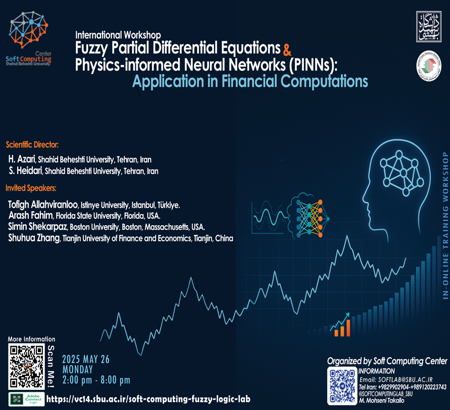
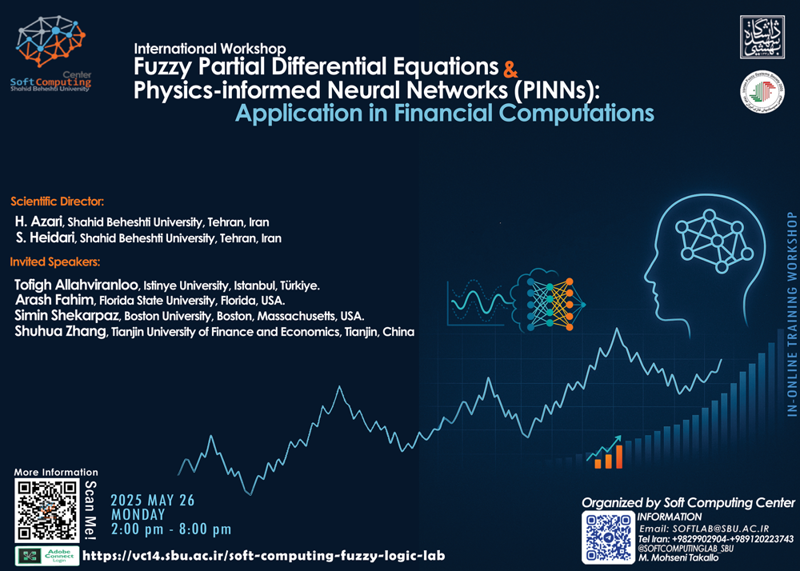
با کمال افتخار از شما دعوت میکنیم تا در کارگاه بینالمللی معادلات دیفرانسیل جزئی فازی و شبکههای عصبی مبتنی بر فیزیک (PINN): کاربرد در محاسبات مالی، که توسط مرکز محاسبات نرم دانشگاه شهید بهشتی، تهران، ایران برگزار میشود، شرکت کنید.
Dear Researchers,
We are pleased to invite you to attend the International Workshop on Fuzzy Partial Differential Equations and Physics-informed Neural Networks (PINNs): Application in Financial Computations, organized by the Soft Computing Center of Shahid Beheshti University, Tehran, Iran.
This online workshop will be held on:
 Date: Monday, May 26, 2025
 Time: 14:00 – 20:30 (Tehran Time)
 Link: https://vc14.sbu.ac.
The event will feature a series of expert lectures and discussions on the intersection of fuzzy systems, partial differential equations, and AI PINNs models with applications in financial computations.
 Program Schedule:
| Time (Tehran) | Program |
|---|---|
| 14:00 – 14:30 | Opening Session |
| 14:30 – 15:30 | Lecture: Tofigh Allahviranloo |
| 15:30 – 16:00 | Discussion and Q&A |
| 16:00 – 17:00 | Lecture: Arash Fahim |
| 17:00 – 17:30 | Discussion and Q&A |
| 17:30 – 18:30 | Lecture: Simin Shekarpaz |
| 18:30 – 19:00 | Discussion and Q&A |
| 19:00 – 20:00 | Lecture: Shuhua Zhang |
| 20:00 – 20:30 | Final Discussion and Q&A |
 Scientific Directors:
Hossein Azari
Saghar Heidari
(Shahid Beheshti University, Tehran, Iran)
 Invited Speakers:
Tofigh Allahviranloo – Istinye University, Türkiye
Arash Fahim – Florida State University, USA
Simin Shekarpaz – Boston University, USA
Shuhua Zhang – Tianjin University of Finance and Economics, China
For additional information, please contact us at:
 mathsci.sbu.ac.ir, cfis2025.
 +98 21 2990 29 04, +98 912 022 3743
 Telegram: @softcomputinglab_
We warmly invite you to join this engaging academic event and look forward to your participation.
Sincerely,
Soft Computing Center
Shahid Beheshti University
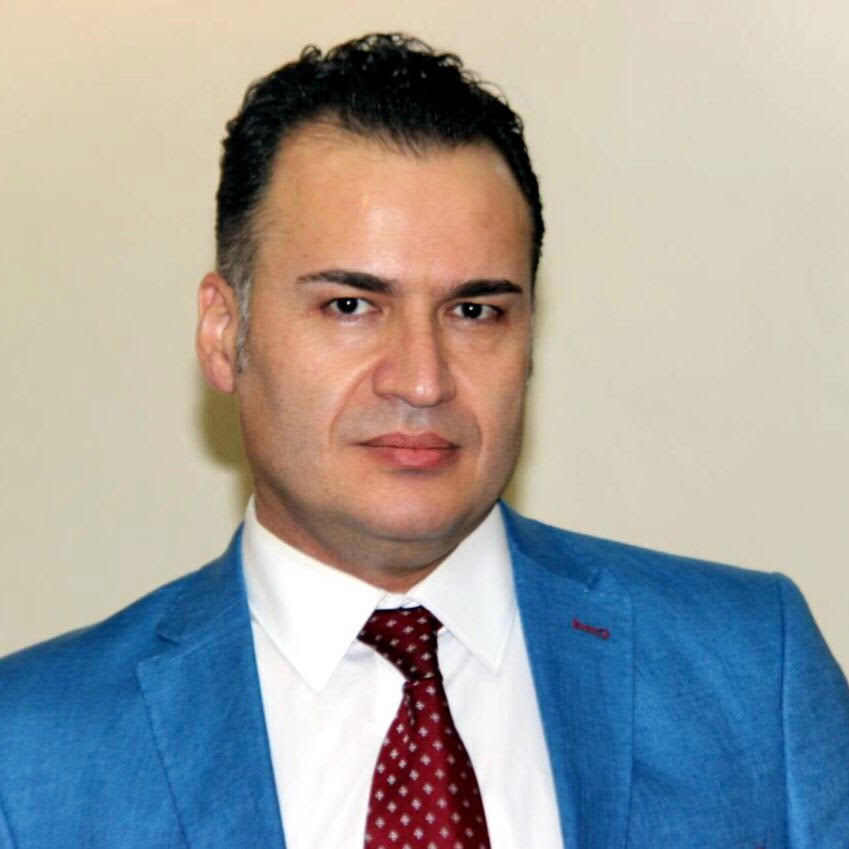
Tofigh Allahviranloo is a full professor of applied mathematics at Istinye University, Türkiye.
🔎Bio:
https://www.sciencedirect.com/journal/information-sciences/about/editorial-board (https://www.sciencedirect.com/journal/information-sciences/about/editorial-board)
📎Title: Linguistic and Fuzzy Dynamics: A New Era for Partial Differential Equations
✏️Abstract:
This talk explores the integration of uncertainty modeling into partial differential equations (PDEs), highlighting how concepts such as fuzzy numbers, Z-numbers, and Z-linguistic numbers enhance the ability of mathematical models to handle imprecision, subjectivity, and human-like reasoning. By extending classical PDEs to account for linguistic terms like “moderate risk” or “usually effective,” we can better represent real-world complexities in fields such as healthcare, artificial intelligence, and decision-making. The presentation emphasizes the balance between analytical rigor and interpretability, demonstrating how these enriched models offer a more comprehensive framework for addressing uncertainty in dynamic systems.
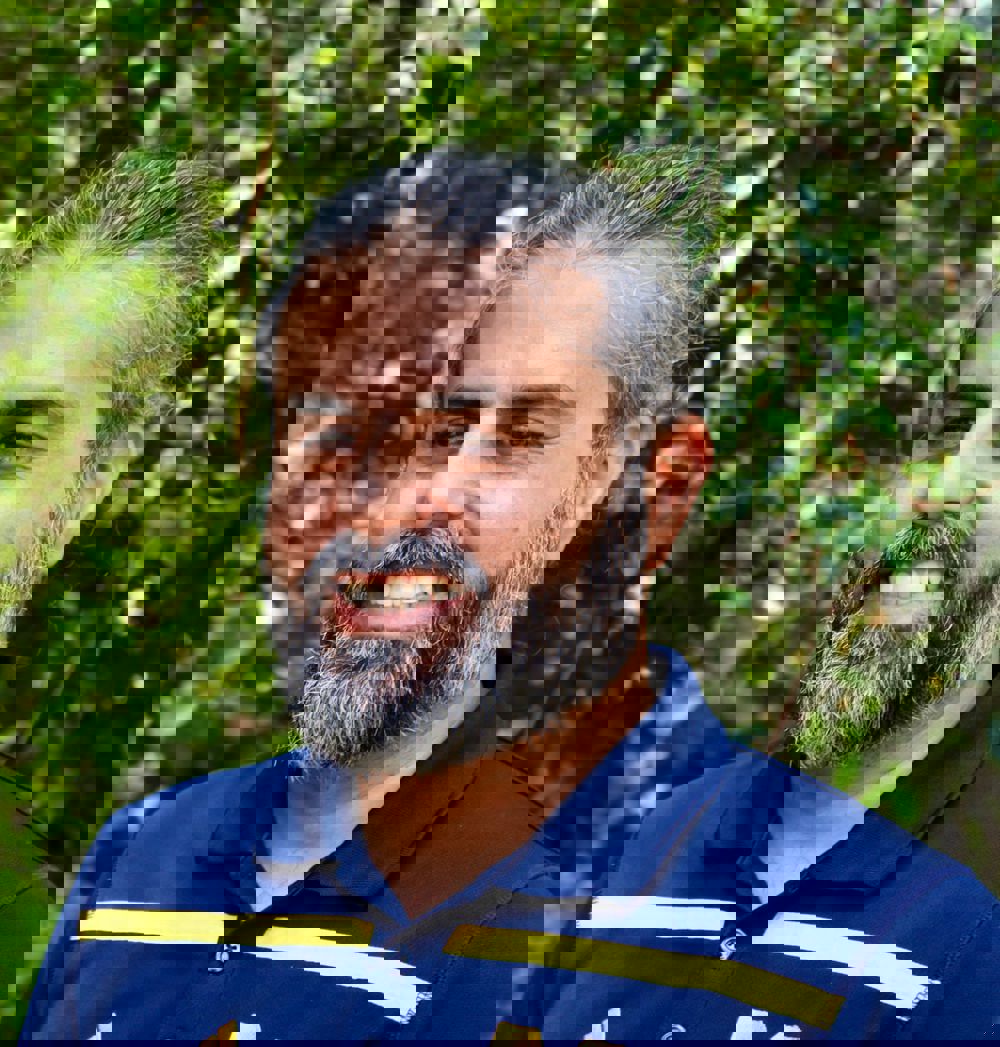
Title: "Gaining efficiency in policy gradient methods for optimal control"
Arash Fahim is an associate professor of mathematics at Florida State University. He has worked in various topics including numerical methods for Hamilton-Jacobi-Bellman equations, partial differential equations with random coefficients, model risk in financial modeling, dual risk models, and most recently in machine learning methods for optimal control and partial differential equations. He also authored open-access books in financial mathematics.
Dr. Simin Shekarpaz is currently a postdoctoral associate in the Center for Space Physics at Boston University. Her research is at the intersection of applied mathematics, machine learning and scientific computing. She focuses on developing scientific machine learning algorithms that integrate data with physical models, with broad applications in computational physics. Her areas of expertise include data/physics-driven machine learning, multiscale and multiphysics simulations, as well as numerical methods such as operator splitting, spectral methods, and inverse problems. In addition, she is active in other machine learning topics, including adversarial training and hybrid ML models. During her research career, she has published several papers in peer-reviewed journals and conferences, and collaborated on interdisciplinary projects involving physics and data science. She also has experience working with high-performance computing clusters and implementing efficient algorithms using MATLAB and Python.


نشانی : تهران، اوین، ميدان شهيد شهرياری، دانشگاه شهید بهشتی، دانشکده علوم ریاضی، مرکز محاسبات نرم
کدپستی: 1983969411
تلفنخانه دانشگاه: ۲۹۹۰۱
تلفن دبیرخانه: 29902904-021
تلفکس: 22431607
ایمیل: cfis2025@sbu.ac.ir
